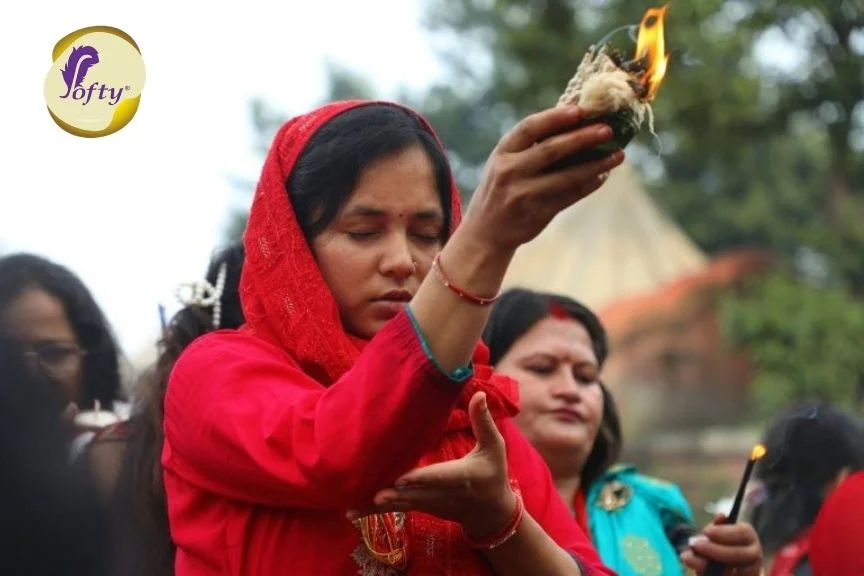
Teej is more than just women wearing red and green sarees, bangles, and beautifying themselves like goddesses and fasting the whole day.
In Nepal, it is a tradition about women fasting every Monday in the name of Lord Shiva and hoping for the lifelong health of their husbands or their future partners.
Further, this is a cultural tradition which combines faith, family, sisterhood, and the experience of women living in the society. Teej is a tradition that has been passed on by mothers to their daughters and so on to subsequent generations.
History behind the Haritalika Teej
Haritalika Teej is also strongly connected with the mythological tale of Goddess Parvati’s worship and her devotion towards Lord Shiva. As per Hindu tradition, Goddess Parvati had to perform severe devotion and prayers to have Lord Shiva as her husband.
This story motivates married women to observe Teej by praying for the well-being, joy, and longevity of their husbands, whereas unmarried women can pray for a good partner for themselves.
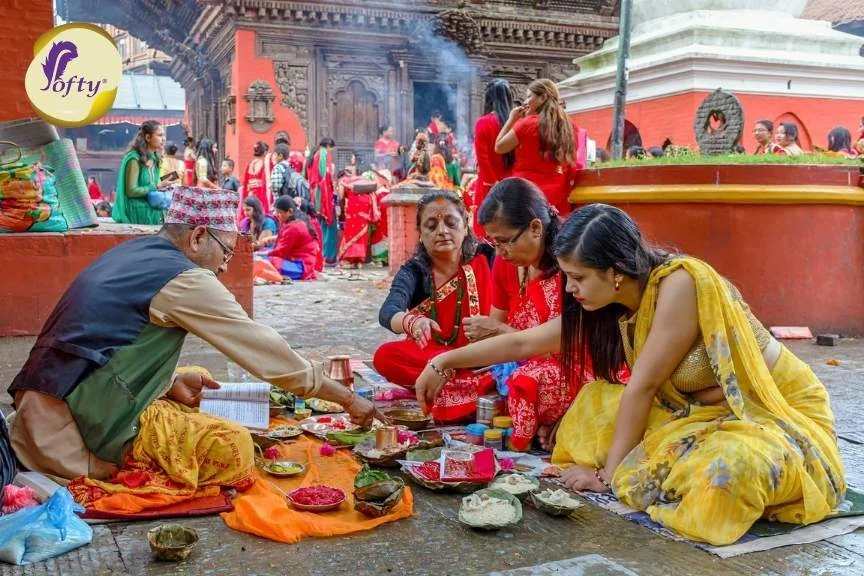
 Moreover, the festival provides a valuable opportunity for women to visit their mothers’ place to meet other women.
Devotion to Lord Shiva can be observed during the holy month of Shrawan. Some of the devotees of Hinduism, especially females, go for fasting and visit Shiva temples on Mondays.
This is also called Shrawan Sombar (Monday is called Sombar in the Nepali language). All these practices are symbolic to spirituality and religious commitment.
Nowadays, Teej is not only a festival related to marital love but has turned out to be an event for female bonding and cultural strength along with spirituality.
Devotion, Fasting and Women’s Well-Being
Fasting is a kind of important tradition in the Nepalese Hindu festival called Teej. A lot of women do this on that day, so they can show their devotion, and real commitment to their Hindu gods, as people say.
 But fasting for many hours, without any food or water, plus nonstop physical movement and temples that are usually packed and crowded, can turn risky in a practical way.
 It may lead to dehydration, feeling weak, dizziness, or even fainting, and then your health becomes just as critical, during the Teej festival itself.
This discipline is traditionally viewed as an expression of devotion, commitment and sacrifice.
All religious customs must be respected with care, concern, and sensitivity towards women’s health needs. It is not about whether a lady can endure any kind of pain; rather, all ladies must be respected and honoured according to their individual health conditions.
Building Community Care Through Trust
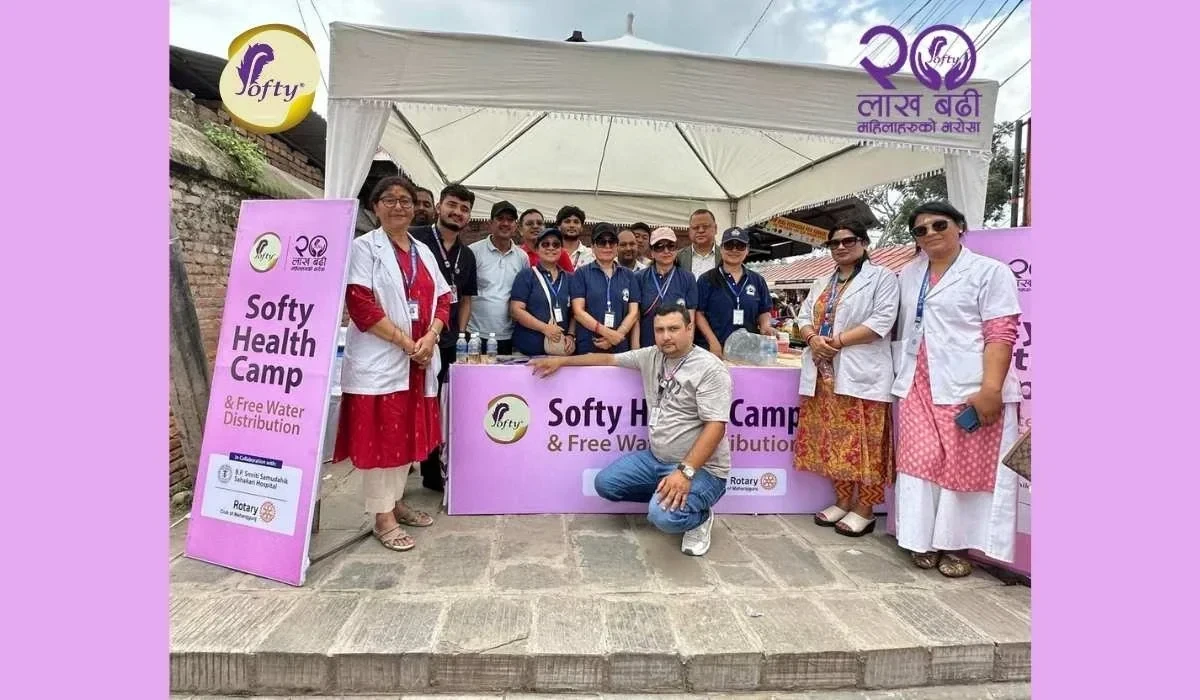
With this understanding, Softy Hygiene Pvt. Ltd. took the initiative during Haritalika Teej on August 26, 2025.
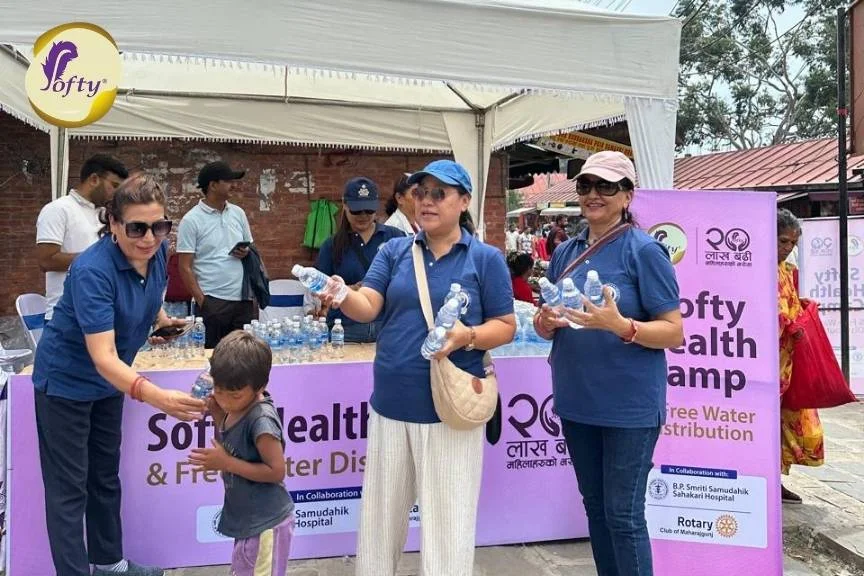
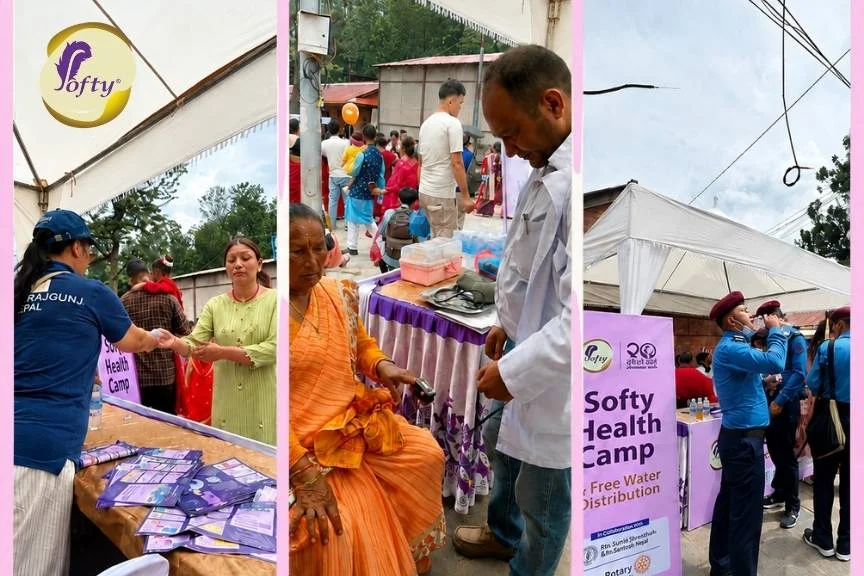
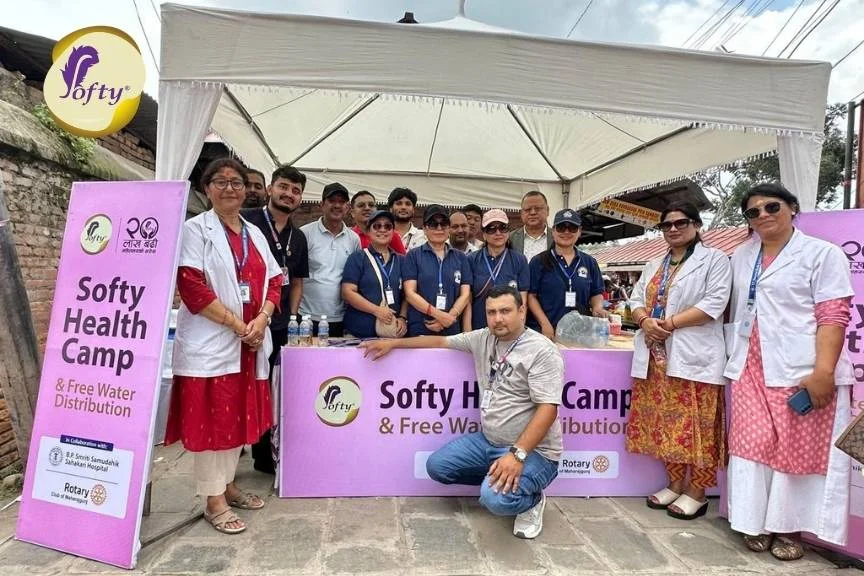
During this Softy Health Camp, we organized a free health checkup and water distribution program in the Pashupatinath area (the Pashupatinath temple is a main holy place where all females gather to celebrate).
It was held in cooperation with Rotary Club of Maharajgunj and B.P. Smriti Samudayik Sahakari Hospital.
 Large gathering of women at Pashupatinath temple on Day 2 of Hartalika Teej to sing, dance and celebrate. Thus, Softy Hygiene, along with its partners stayed on with hands on support to the devotees.
 We distributed 10,000 bottles of drinking water during the program. Services were also provided to women and other devotees feeling weakness, dizziness and discomfort who needed immediate help were provided.
Additionally, we also stayed back till late at night to collect used plastic bottles.
This initiative was not simply about distributing water bottles. For us, it was about understanding the physical realities faced by women during a day of strict religious observance.
In such circumstances, access to drinking water, a place to rest, basic health monitoring or timely medical support can become a meaningful and potentially vital act of care.
Standing Beside the Women Who Trust Us
Softy Hygiene’s commitment to giving back is closely connected to the communities the company serves.
As a Nepali manufacturer of sanitary pads, panty liners, tissues and wipes, Softy Hygiene has become a part of the everyday hygiene journey of women and families across the country.
 With approximately 20 lakh Nepalese women trusting the company, this trust carries a responsibility extending beyond the production and sale of hygiene products. It requires the company to listen to women, understand their needs and support their health, comfort and participation in society.
 This health camp reflected Softy’s commitment to women not just as consumers, but as the backbone of families, communities, and cultural traditions in Nepal.
Supporting women during one of Nepal’s most important cultural occasions was therefore also a way of recognising and honouring their contribution.
Continuing the Journey of Care and Compassion
The traditions become important when the values are passed on diligently. The tradition of Teej teaches people about values like devotion, patience, unity, and spiritual power.
The efforts made by Softy Hygiene have brought an element of social responsibility to the event.
In this case, we demonstrated how corporate social responsibility is the most important one as it fulfils an authentic need through practical means.
 As the traditional folk songs, prayers and colours of Teej continue to pass from one generation to the next, the values of compassion and community care must also continue.
 By standing with women through hygienic products as well as times of cultural and physical importance, we came to understand one important thing: a brand that women can trust needs to be prepared to help them as well.
Therefore, it was more than a CSR activity. It was an expression of gratitude to Nepal’s women and a commitment to building a healthier, more respectful and more supportive society together.
We hope to continue reaching more communities in Nepal in the coming years to cover their core health and hygiene needs, and make a positive, sustainable difference in women's and families' lives.